


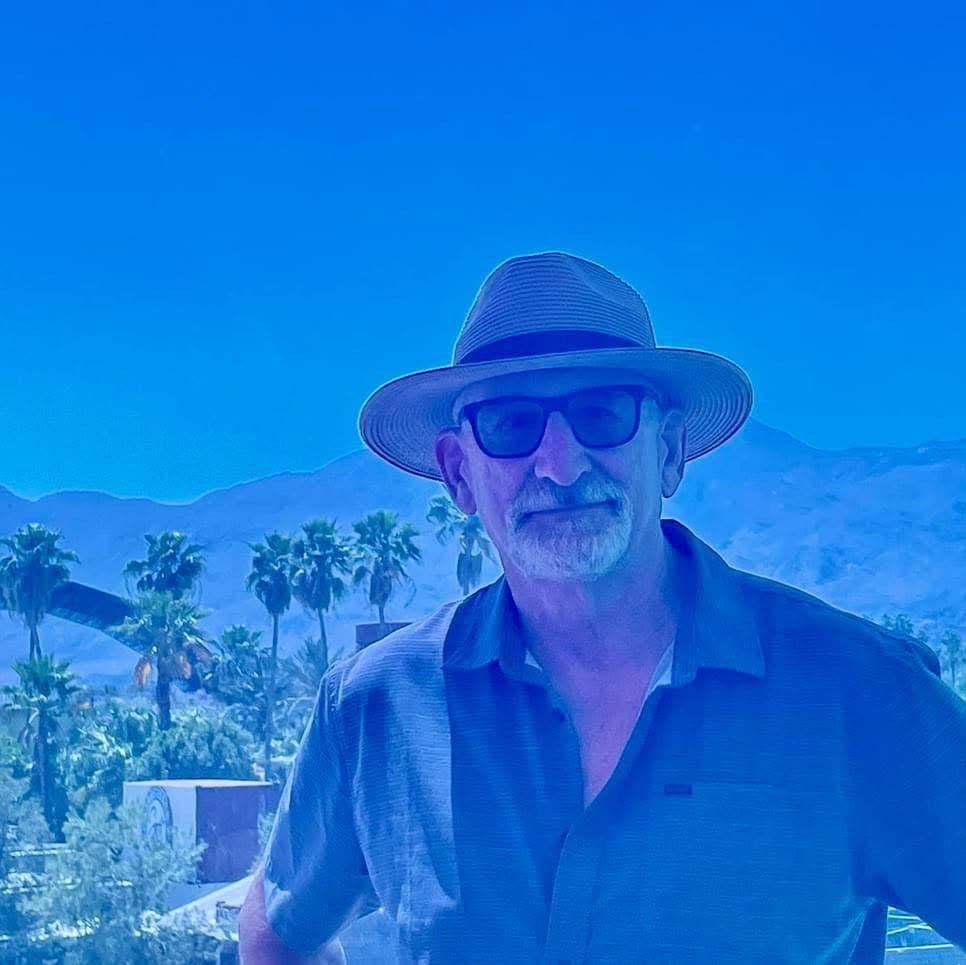
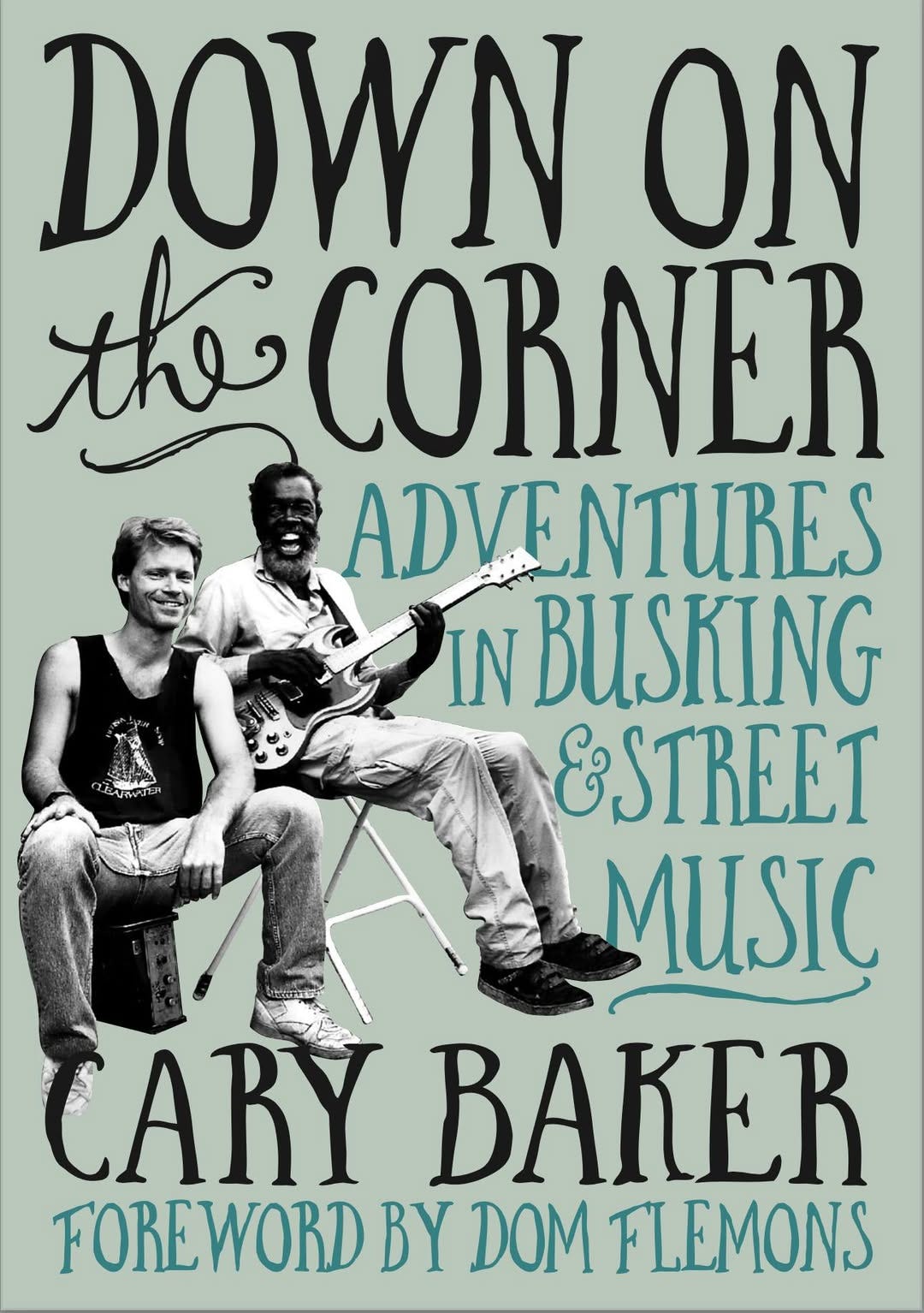
Multi-hyphenate Cary Baker is an author (Down on the Corner: Adventures in Busking & Street Music), the former owner of Conqueroo (a music PR firm), a former head of publicity at six different Los Angeles-based record companies. And in fact, Cary’s background in journalism – and the knowledge of music which that implies – was key to winning credibility among tastemaker critics. Now residing in the California desert, he is enjoying retirement.
I spent about 13 months in the music industry, managing social content and influencer programs for a major touring company and, ultimately, it was not for me. More than the misogyny women often find in the entertainment industry, I found a lot of ageism there — though there were definitely some great people in the midst.
All that’s to say I have a lot of respect for individuals like Cary who not only found longevity in the business, but work hard and maintain an honorable reputation. He’s a gem and it was exciting to speak with him about his journey!
Q: Cary, please introduce yourself and tell us how you first got your foot in the PR/Comms door!
A: Pertinent to this feature, I spent 42 years in music publicity — 1980 to 2022. But I began in music journalism — and in my so-called retirement from publicity, I am writing once again…this time books as well as the occasional article.
I was born in Chicago and got bitten by both the blues and rock ’n’ roll as a child. In my teens in Chicago’s suburbs, I was publishing a scrappy blues fanzine (with a global subscriber base), serving as music director and public relations director of my high school FM radio station, and working as features editor of the school newspaper. Naturally, I was maintaining a B-/C+ average, as my world was more extracurricular than curricular.
Then came the day that changed my life. My father took me to an area of Chicago called Maxwell Street Market. There, I heard a blind street blues singer with a slide guitar and a tin cup. My world changed. I got his phone number, called him up, and sent the interview feature on spec to the newly launched Chicago Reader. They published it. Soon, I was writing for dozens of music and regional publications — Billboard, Creem, Trouser Press, Mix, Record and the Illinois Entertainer, to name a few.
I studied journalism at Northern Illinois University in DeKalb, Ill., moved back to Chicago, and was soon offered the job of National Publicity Director at Ovation Records, an independent Chicago label that had put itself on the map with its country releases. I hadn’t paid much attention to country prior to that, and rock ’n’ roll — by now just after the punk/new wave revolution — remained my thing. But I found a real community in Nashville. I remained a freelance writer in my off hours. At 25, I apparently didn’t require much sleep.
One day, while living in a 400-square-foot coach house in Chicago’s Wrigleyville neighborhood, I received word that my favorite label — I.R.S. Records, home of R.E.M., the Go-Go’s, the English Beat and more — was seeking a head of publicity. I mailed off a résumé and cover letter. So did 60 others.
It so happened that I already had plans to visit sunny Los Angeles during Chicago’s midwinter. I found myself interviewing with four label executives. And lo and behold, I got the job. I helped catapult artists like R.E.M., the Alarm, Concrete Blonde, the dB’s and Fine Young Cannibals into the press, helping develop them into cover-story acts.
From I.R.S., I went to Capitol Records as head of publicity — a big job, with a staff of ten and artists including Bonnie Raitt, Paul McCartney, Beastie Boys, the Smithereens and Crowded House. Some artists had independent publicists, others didn’t. My job was to strategize media presence.
My fondest memory was campaigning to get the Smithereens onto Saturday Night Live with a coordinated team of staffers and indies, and ultimately (my idea) a personal call from the label president as well. An artist dropped out, and the Smithereens got the call.
Following an eventful two years at Capitol, I worked for a few other labels — Morgan Creek and the Warner Music imprint Discovery Records — before heading out on my own, first with a partner and later by myself. My second and final PR firm, Conqueroo, represented a number of Grammy winners and nominees largely in the blues and Americana space: Bobby Rush, Rodney Crowell, the Mavericks, and reissues on the Omnivore label, to name a few.
In 2022, then in my late 60s, I made the very tough decision to leave both music PR and my beloved home of 38 years, Los Angeles. My wife and I relocated to the California desert, long one of our favorite getaway spots, and magical in so many ways. It was an adjustment. But I soon realized I could have lunch with a different music industry or journalist/author friend every day of the week.
I found community both in Palm Springs and the Coachella Valley, and in the Hi-Desert: Joshua Tree, Yucca Valley and Twentynine Palms. I never thought I’d be as busy in the desert as I was in L.A. The area boasts music venues ranging from Pappy & Harriet’s to Acrisure Arena. And I organize an annual music/media industry mixer in Palm Desert.
Most of all, living in the desert has given me the freedom to reinvent myself. In late 2024, I published my first book: Down on the Corner: Adventures in Busking & Street Music (Jawbone Press). My life had come full circle, back to that blind street blues singer I saw at age 16 when my dad took me to Chicago’s Maxwell Street. Closing that circle proved therapeutic.
I hired a music publicist — a friend who is also a former associate — to launch the PR on the book. But ultimately, I got in there and pitched along with her. The book became an NPR “Book of the Day,” and I did interviews, podcasts and book signings in many major cities for more than a year. And make no mistake: when my literary agent pitched publishers, my publicity background was definitely not a minus.
Q: Tell us a little about what you’re doing today.
A: Book #2 is a biography of a respected Grammy Award-winning musician and is about four-fifths complete. That’s all I can say.
I use the rest of my days on desert time, which is a lot like reggae time — writing for publications like American Blues Scene, Best Classic Bands and The Tonearm, as well as contributing a feature to SPIN last year. When I first got to town, I became fascinated by the surprisingly vibrant music scene in Joshua Tree and environs and wrote a feature about it for No Depression.
Q: What do you think is the biggest challenge about being a publicist in 2026?
Gosh, you know, I haven’t been a publicist in three years, and much has changed. Conqueroo still sent out physical CDs to reviewers who demanded them. But physical newspapers were slightly meatier and fully staffed, and alt-weeklies were still a thing. That has changed in a lot of locations. I’m not sure where — or if — you’d pick up an L.A. Weekly. But Palm Springs still reliably has a print alt-monthly and an online weekly.
A lot of my job involved setting up online premieres for singles in whatever online publications would accept them. That was tough for new and developing artists, but there were always some great online editors who obliged us.
But clearly, the world had shifted from print to online, and then heavily toward podcasts. Don’t get me wrong: I very much appreciate podcasts, and they did me a world of good when I was doing book publicity. But in my heart, I’m a newspaper man. So I stepped away during a transitional time.
No doubt, being a music journalist won me credibility on journalism circles. I was proudly the anti-Bobbi Fleckman.
Time brings on a change. And change is good. But I might not recommend semi-retiring and moving in the same season! Anyway, here I am, inventing and reinventing. The desert scenery — and the scene — is first-rate. And hey, I can be in L.A. for a meeting or show in 2.5 hours — except when it takes longer.
I want “Time brings on a change. And change is good.” embroidered on a throw pillow. That’s a good thing to remember. So is “inventing and reinventing.”
What struck me most about speaking with Cary wasn’t just the longevity of his career, it was the curiosity that fueled it. In an industry obsessed with what’s next, he built a reputation by genuinely loving music, loving stories, and respecting the people behind them. That combination feels increasingly rare.
There’s also something reassuring about hearing from someone who has reinvented himself multiple times without losing the thread of who he is. Journalist, label publicist, agency founder, author…. The titles changed, but the passion for storytelling never did. In a field where burnout and cynicism can creep in fast, Cary feels like proof that a long career doesn’t have to harden you. Sometimes it can deepen you instead.
Thank you, Cary, for taking the time!
Fascinating stuff! Hadn't heard of his book on street music but it looks excellent.